How we got to Creative Pattern Making: “from mini to maxi”
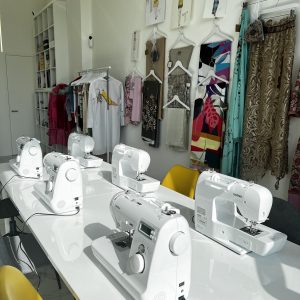
At Vikileria Revive, our sewing workshop in Madrid, we’ve always believed that every stitch tells a story. That’s why this


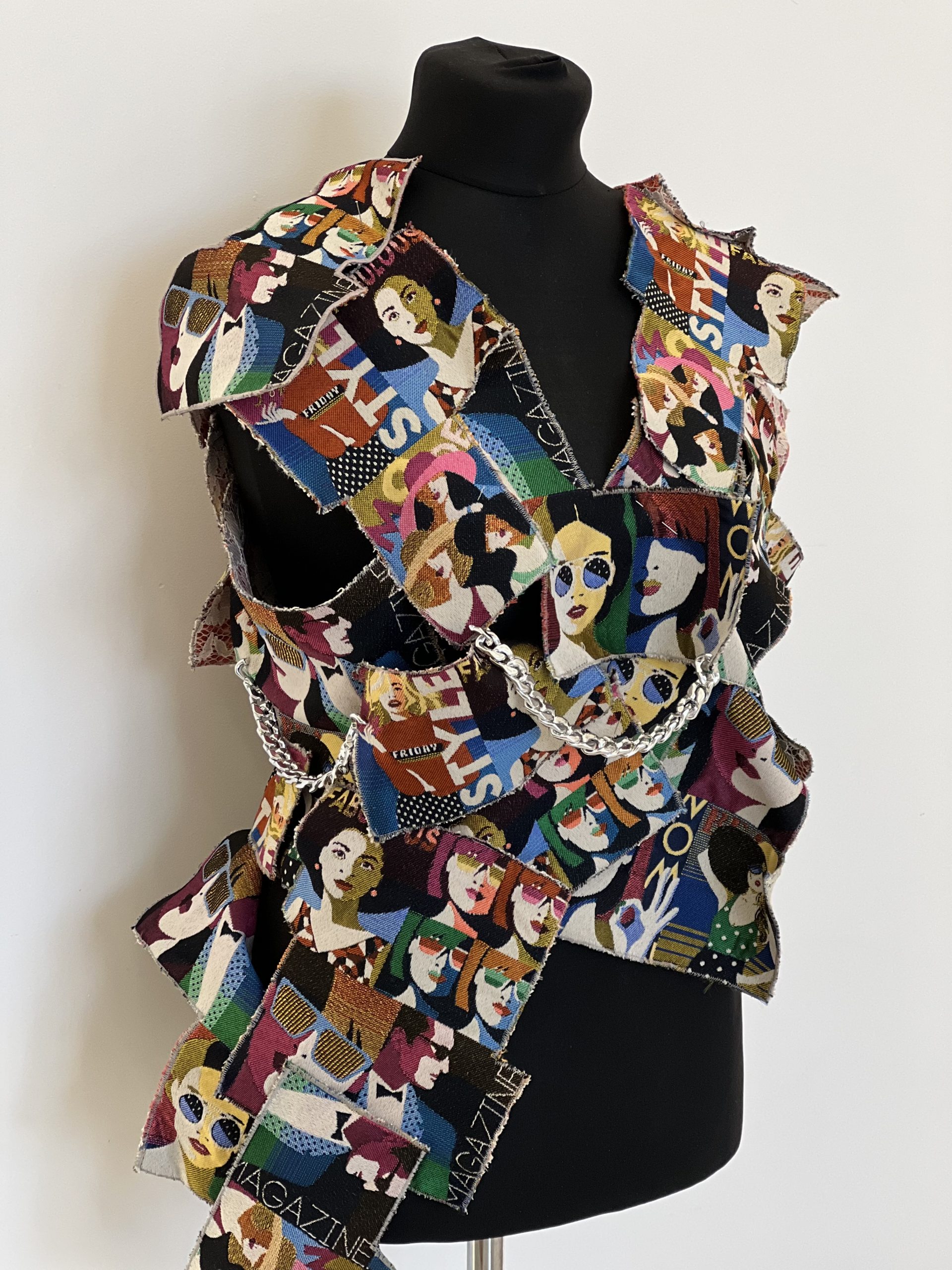
For decades, sewing has been taught as a territory of precision, repetition and rules. Patterns, measurements, instructions. An efficient system for learning technique, but not always enough for those who sense that a garment can be more than a correct result.
In creative sewing, the process shifts. The central question is no longer what am I going to make? but from where am I creating? Designing a garment from an idea or a sensation means accepting that the path is not linear and that the outcome is not fully defined from the beginning.
Working without fixed patterns does not mean working without direction.
It means that direction is not drawn in advance.
Before a garment exists, there is often an intuition: a persistent emotion, a bodily discomfort, a recurring mental image. In these processes, the garment appears as a material response to something that has not yet found its form.
The idea does not translate directly into design. It is filtered, transformed and sometimes contradicted throughout the process. That friction is precisely where research takes place.
When the closed pattern is abandoned, the relationship with the body changes. The focus is no longer on adapting a pre-existing form to a size, but on listening to how the body dialogues with the material.
Sensation — pressure, lightness, expansion, resistance — becomes a silent guide. Form is not imposed; it emerges through tension, folds, accumulation or emptiness.
This type of design does not aim to correct the body, but to inhabit it through the garment.
In textile research processes, materials are no longer secondary.
They are not chosen only for functionality, but for their behavior, memory and capacity to generate meaning.
Experimenting with different materials — conventional fabrics, ropes, lace, feathers, remnants, non-textile elements — allows the garment to be constructed through multiple layers of interpretation. Each material introduces limits, resistance and possibilities that reshape the original idea.
Sometimes the material contradicts the intention. At other times, it reveals it more clearly than expected. Learning to listen to that dialogue is part of the creative work.
Designing without patterns or fixed molds does not imply a lack of structure.
Structure exists, but it is built during the process, not beforehand.
Experimental sewing relies on:
Error is not immediately corrected. It is observed, analyzed and integrated. In this context, the process holds as much value as the final result.
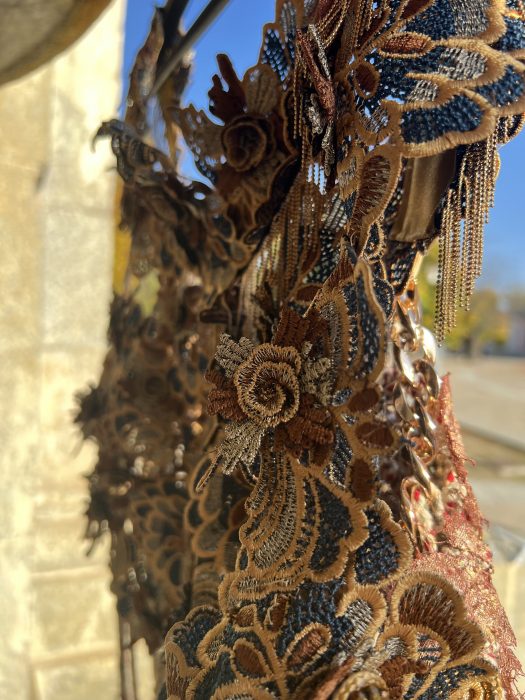
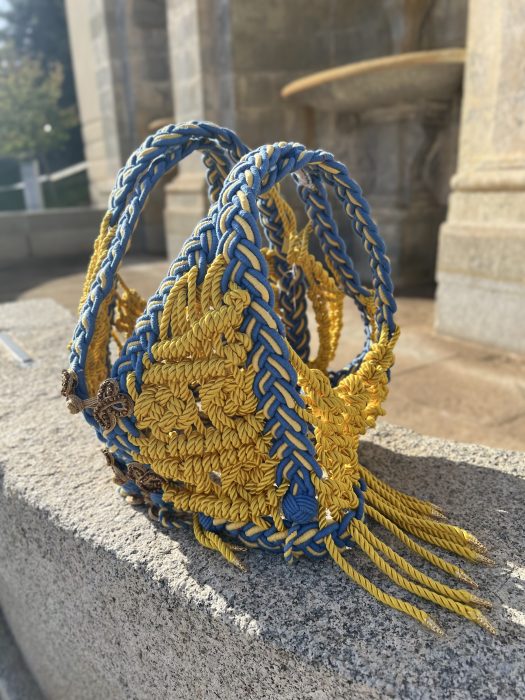
In creative sewing, a garment is not finished when it looks aesthetically correct, but when the idea can be read through it.
Coherence becomes the main criterion:
Some garments are not meant to be wearable in a conventional sense. They are research pieces, fragments of an ongoing inquiry or starting points for future processes.
The need for spaces where sewing can function as reflection — and not only as technique — is what gives rise to Vikileria Lab: a space dedicated to creative sewing, experimental design and textile research in Madrid.
Vikileria Lab does not offer closed answers, but guided accompaniment within open processes. It is a place for those who feel that sewing can also be a form of critical, sensitive and personal thinking.
Creating a garment from an idea or a sensation means embracing the discomfort of not knowing. It requires time, attention and an honest relationship with material and body.
When the fixed pattern is abandoned, the garment stops being an objective and becomes a living process. And it is in that space — between idea and form — where sewing reveals its full potential as a language.
If this approach resonates with you and you feel the need to explore sewing from a different place, Vikileria Lab offers group and individual sessions focused on creative processes and textile research.
It is not about sewing better.
It is about thinking differently through sewing.
At Vikileria Revive, our sewing workshop in Madrid, we’ve always believed that every stitch tells a story. That’s why this